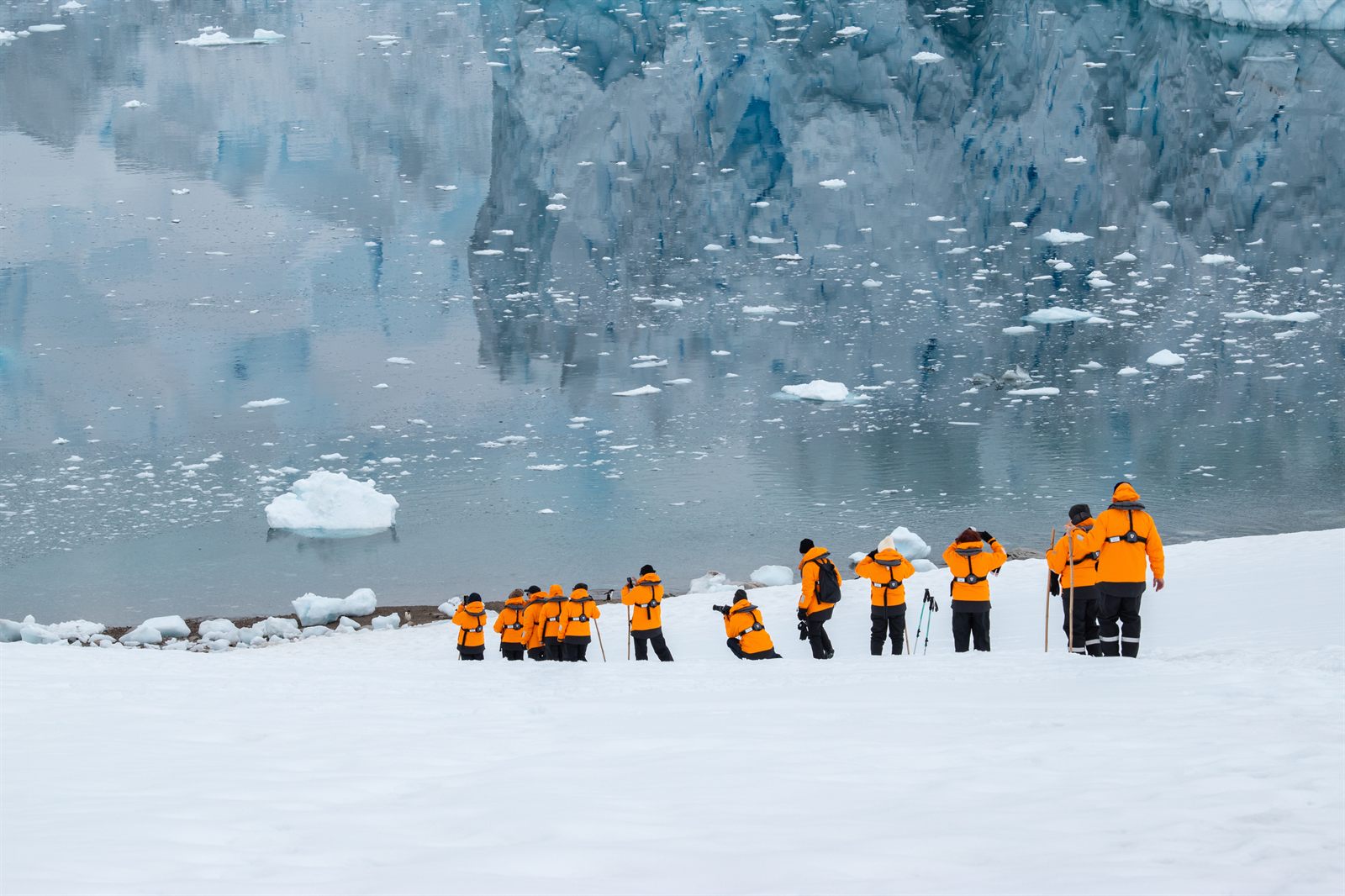
Antarctica Landing Rules
How the Antarctic Treaty and IAATO keep the continent wild.
Get Expedition QuotesWhy Antarctica Has Rules Like Nowhere Else
Antarctica belongs to no single country. It is managed under the Antarctic Treaty, and tourism there follows some of the strictest visitor rules on Earth. They decide how many people can land, where, and how they behave ashore.
Most expedition operators are members of the International Association Antarctica Tour Operators, known as IAATO, founded in 1991 to promote safe and environmentally responsible travel. Its guidelines sit alongside the rules adopted by the Treaty nations, which the Antarctic Treaty Secretariat publishes. Together they make an Antarctic landing very different from a day in a normal cruise port.
The Landing Limits
500-passenger limit
According to IAATO, only ships carrying fewer than 500 visitors may make landings at approved sites. Larger ships offer scenic cruising only.
100 people ashore
No more than 100 passengers may be ashore at one time at a site, so on larger expedition ships, guests take turns.
One ship per site
Only one ship may visit a landing site at a time, and ship schedules are coordinated so that sites are not crowded.
Guides on shore
Landings are supervised by expedition staff, with a minimum ratio of one guide for every 20 passengers ashore.
How You Behave Ashore
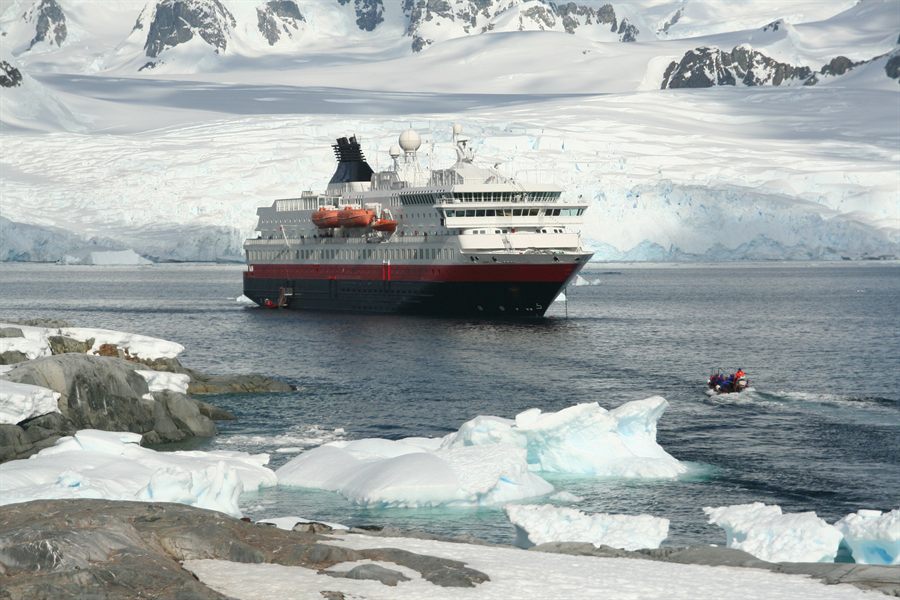
The rules ashore are simple and taken seriously. IAATO’s visitor guidelines ask visitors to keep a safe distance from all wildlife on land and at sea, never to bring non-native plants or animals, and never to take specimens or artifacts. Expedition teams add practical routines, such as walking only in marked areas and keeping clear of penguin highways.
Biosecurity is a big part of the routine. Before the first landing, staff check outer clothing, bags and boots for seeds and soil, and you will scrub and disinfect your boots before and after each landing. IAATO’s “Don’t Pack a Pest” guidance explains why: a single seed can introduce a species that does not belong.
What This Means for Your Choice of Ship
- Under about 200 guests: everyone can usually go ashore at the same time, so each landing feels unhurried.
- 200 to 500 guests: landings are rotated in groups of up to 100, which can mean shorter time ashore per person.
- Over 500 guests: no landings at all; you see Antarctica from the deck.
See expedition ships and landings for how to compare vessels.
Landing Rule Questions
Who makes the rules for Antarctic tourism?
Antarctica is governed by the Antarctic Treaty system. Tour operators work under the Treaty’s environmental rules and the guidelines of IAATO, the International Association Antarctica Tour Operators, which most expedition companies belong to.
Can I take a pebble or a feather as a souvenir?
No. Visitors may not take biological or geological specimens or historic artifacts, including rocks, bones, eggs and fossils. Photographs are the only souvenir.
How close can I get to penguins?
Keep a safe distance and let wildlife set the pace. Your expedition guides will tell you the distances to keep and will mark paths around colonies. If an animal changes its behavior because of you, you are too close.
Find a Ship That Lands
Tell us how much time ashore matters to you. Our cruise advisors at Mister Cruise will compare small-ship voyages and send free quotes.
Get Expedition Quotes